
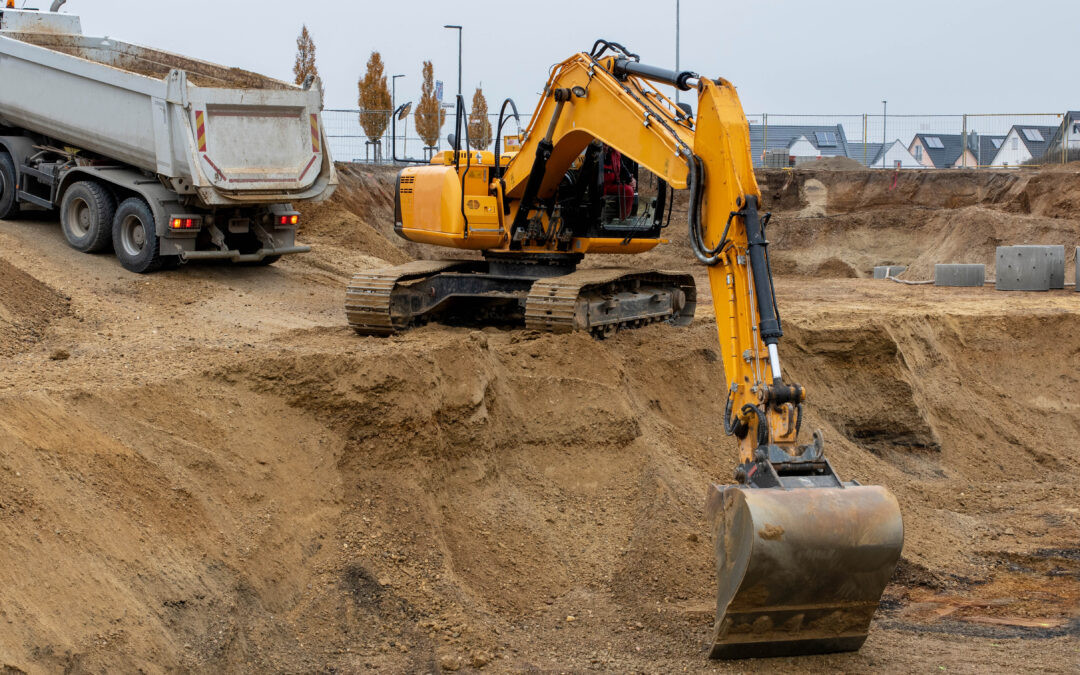
Constructing buildings or infrastructure requires transforming vacant land into a suitable foundation for the planned structures. While the visible superstructure gets most attention, the underlying groundworks constitute a vital first stage enabling subsequent construction phases.
Groundworks refer to the below-ground activities that prepare sites for the impressive structures later built above the surface. Here at Oran Transport, we can provide a complete range of groundworks in Reading and the surrounding areas.
Site Clearing and Stripping
Beginning construction first involves clearing away any existing barriers onsite:
- Trees, stumps, bushes – Removed using excavators and grinding equipment
- Remaining roots – Grubbed out to avoid regrowth damaging buildings
- Topsoil – Stripped away exposing firmer subsoil for foundations
- Debris, trash – Hauled off site; materials sorted for recycling
Thorough clearing and stripping produces an empty canvas for the new planned development.
Adjusting the Grade
Raw vacant properties often contain uneven terrain, sags, or hilly areas. Groundworks level the elevation, achieving the necessary flat pads or desired grade changes.
Activities include:
- Surveying and mapping original contours
- Mass excavation of high points to reduce elevation
- Hauling in filler materials like aggregates to raise low spots
- Fine grading using bulldozers and graders for precision slope control
Precision grading prevents problematic settling or runoff issues later on.
Excavating Foundations
With the site levelled, crews dig down to create spaces for upcoming foundations and utilities.
- Footings – Trenches dug with square-edged bottoms to support walls and piers
- Basements – Large open areas excavated as deep as the planned subfloors
- Service trenches – Narrow trenches running to/from buildings for water, sewer, conduits
Proper soil validation, sloped walls, and drainage are installed to facilitate robust foundations.
Constructing Retaining Elements
Sloped sites often require retaining walls or structures holding back earth:
- Gravity walls – Brick, concrete, or stone walls using sheer mass to resist soil pressure
- Piling walls – Vertical or angled piles anchored in place to brace enclosed backfill
- Other systems – Metal cribbing, geosynthetic wraps, soil nailing, gabion baskets, etc.
Retaining infrastructure allows building upon sites with substantial grade changes.
Installing Subsurface Drainage
Groundwater accumulation or perched water tables cause problems if not managed. Drainage installations prevent wetness issues inside structures:
- Perforated pipe drainage rings around foundations capture subsurface water before it enters walls.
- French drains consisting of gravel trenches lined with drainage pipe also divert away moisture.
- Sump pits and pumps provide backups to eject water if unwanted seepage occurs.
Keeping foundations bone-dry prevents stability risks and indoor humidity issues.
Facilitating Constructed Assets
Some projects involve below-grade infrastructure like tunnels, underground parking facilities, reservoirs, utilities, etc. Complex groundworks produce tailored subterranean spaces for these assets.
Other examples include material stockpiles, equipment yards, temporary roads, and contractor facilities needed for managing the overall project workflow.
Groundworks establish essential supporting infrastructure enabling the extensive builds to come. Don’t underestimate their importance!
Specialised Site Solutions
Tough sites with contamination, demolished foundations, mines, landfills, etc. require remediation or reinforcements:
- Contaminated soil removal and abatement using chemical stabilisation, barriers, or drainage control
- Demolition debris screening and disposal
- Compaction grouting to stabilise loose sands or underground voids
- Deep dynamic compaction driving out soft subsurface areas
Difficult locations demand tailored groundwork remedies so construction proceeds safely.
Don’t Underestimate Groundworks Importance
The groundworks phase lacks the visible excitement of seeing new structures rise up. Yet none of those impressive superstructures would be achievable without the essential subsurface preparations described here.
Stable, properly contoured sites do not materialise naturally. They result from deliberate earthworks reconfiguring the existing terrain and infrastructure to enable subsequent builds.
Trust Oran Transport for Smooth Groundworks Execution
With over 30 years of site preparation experience, Oran Transport brings efficient groundworks execution allowing you to shift focus toward visible construction progress. Our fleet of excavators, loaders, bulldozers, and articulated dump trucks can make quick work of:
- Clearing and stripping sites
- Grading pads and slopes
- Mass excavations and trenching
- Installing retaining elements
- Constructing roadways and support infrastructure
Poor groundworks slow down a job and can even make the whole structure less stable. Trust Oran Transport’s local team to rapidly transform raw land into optimised pads ready for your foundations and facilities. Contact Oran Transport today to discuss detailed groundworks solutions custom-tailored to your unique site challenges and construction plans!

76xgame popped up on my radar. Decent games, not too shabby at all. If you’re bored, give it a try. Here’s the link: 76xgame
68mx, a lot of new sites coming out these days. Gonna take a peek and see if its worth adding to the rotation! Good luck everyone. 68mx
92brlbet, let’s see what this is all about. Hoping for some nice promotions! I like trying new places! Worth checking. 92brlbet
02game? Heard some buzz about it. Figured I’d give it a shot. Not bad, not bad at all. Worth a peek, ya know? See for yourself at 02game.
88CLB8GQ com sounds interesting, maybe it’s com-ing to give me some winnings? Lets go check it out 88clb8gq com and put some money in me pocket.
Golden Empire Jili on Jililiveph.Net is where the fun’s at! Seriously, love this game. Super addicting and the wins can be pretty sweet. Definitely give it a go here golden empire jili
Okay F188bet, what are your slot options? I’m looking for some fresh slots. Show me the money spinners. Hope to see some amazing results there in future. f188bet
Alright folks, 8usgameclub is where it’s at if you’re looking for some fun online gaming. I’ve been playing here for a while, and honestly, it’s pretty decent. Check them out at 8usgameclub.
Okay, so tibj388 is one of those sites. Could be worse. I’ve spent some time here. Do your research, but hey maybe you’ll win big! Check it out here tibj388.
Heard about alo789link? It’s out there too. Take a look, don’t put your trust in me : alo789link.